
GOVERNMENT AFFAIRS
We fight in the halls of government on behalf of New York City’s restaurant and nightlife industry.
The Alliance fights for policies that allow New York City’s restaurants, bars, and nightlife venues to operate and thrive. We work with City and State leaders to reduce unnecessary regulatory burdens, modernize outdated laws, protect workers, and ensure the industry’s voice is heard as new policies are proposed and implemented. Below is a summary of our policy priorities and a record of key policies we’ve helped enact.
ACTIVE CAMPAIGNS
-
Appoint a Small Business Czar who reports directly to the mayor to drive meaningful reform. The appointee should be a small business expert, quick learner, and politically savvy, capable of working with the City Council as well as State and federal lawmakers on significant small business policies. To be effective, the Czar must have authority above agency commissioners to implement the mayor’s small business agenda and navigate bureaucracy, overcoming resistance from agencies and the permanent bureaucracy. This Czar needs authority concerning all matters impacting small businesses.
-
Cut delays, reduce paperwork, and lower costs for businesses trying to open or grow.
-
Give more resources to the NYC BEST team and reestablish and expand the New Business Acceleration program created under the Bloomberg Administration, automatically offering it to all small businesses. Assign a dedicated case manager for coordination across city agencies, support for permitting, and services that small businesses often do not know about. This will help small businesses open and expand faster, reduce burdens, and not force businesses to spend so much money on consultants and expeditors.
Accountability, Cutting Red Tape, Strengthening Small Businesses
Lawsuits, Labor Law, Tip Credit
-
New York City’s minimum wage will rise next year with automatic inflation adjustments. This system was intended to give annual cost-of-living increases to workers, while giving small businesses predictability, and ensuring wage growth is tied to economic conditions rather than political cycles However, entry-level jobs like porters, many cooks, food runners cannot sustain $30/hour without risking business closures.
Eliminating the tip credit while raising the minimum wage to $30/hour would increase labor costs by more than $40,000 per full-time tipped worker annually, creating unsustainable costs resulting in fewer hours for workers, massive layoffs, eliminating tipping that reduces workers’ income, and the shuttering of small businesses. In Washington, D.C., phasing out the tip credit resulted in restaurant closures, job losses, higher prices for customers, widespread service charges, and reduced tipping – so much so that the city’s elected leadership reinstated the tip credit. Chicago is now experiencing similar outcomes, with restaurants cutting hours and staff, raising prices, and warning of permanent closures as the city phases out its tip credit, underscoring the serious risks of pursuing this policy in New York.
-
Provide small businesses with accessible legal guidance and safe harbor protections when following expert advice. Reform laws to be compliance-driven with government support, not driven by costly lawsuits, by removing private rights of action.
-
Allow for Cure Period. Reduce Lawsuits.
Require notice and a right to cure alleged violations: Businesses should receive written notice of alleged barriers and have 90 days to correct them before a lawsuit is filed. This promotes compliance rather than litigation.Establish clear rules for website accessibility: There is no official guidance on whether and how websites must comply with public accommodation laws. Clear standards would help businesses understand and meet their obligations.
Allow prevailing defendants to recover attorneys’ fees and costs: Frivolous ADA and human rights lawsuits are often driven by attorneys’ fees rather than genuine harm. Allowing fee recovery, including joint liability for counsel, would deter abuse.
Wage and Hour Reforms
-
This would reduce pay disparities between front- and back-of-house staff. It would also align New York law with most other states.
-
The rule is unclear, impractical to track, and a major source of litigation. As long as total compensation meets minimum wage, arbitrary time thresholds should not apply.
-
Ambiguity around how many uniforms must be provided has led to excessive lawsuits. The law should clearly state that employers must provide uniforms equal to days worked.
-
Current penalties are excessive and can threaten business viability over paperwork errors. Penalties should be reduced.
-
Employers should be protected when they substantially comply with the law. This is especially important when errors are unintentional.
-
When wage statement mistakes are caused by third-party vendors, liability should shift accordingly. Employers should be allowed to seek indemnity and contribution.
-
The Legislature should overturn the Robinson decision. Employers should be able to insure against wage claims and recover from responsible third parties.
-
This would reduce pay disparities between front- and back-of-house staff. It would also align New York law with most other states.
-
This proposal allows liens or asset seizures against the personal assets of small business owners, investors, and managers based solely on allegations—not a court ruling—undermining basic constitutional due-process rights. Its broad definition of wage claims and low standard for attachments could trigger massive penalties based only on accusations. In practice, it would force many small business owners to quickly settle for excessive amounts just to lift the lien, or even shut down entirely, costing jobs and harming the economy.
Fines, Fair Enforcement, and Regulatory Reform
-
Focus on education and training and provide small businesses with warnings and cure periods for violations before levying fines—every violation that does not pose an immediate hazard to the public and/or workers must allow for a warning or cure period. Retroactively and prospectively ensure that any penalty (fine) amount set by agency rulemaking does not exceed the minimum amount established in local law.
-
Reform the restaurant inspection system to ensure due process for small business owners and focus restaurants posing a sanitary risk. Restaurants with 14+ points on an initial inspection should not be re-inspected until adjudication; if points drop below 14, no fines or re-inspection occur, and the restaurant enters a new cycle in one year. Ensure timely re-inspections or allow a “Grade Pending” sign be posted once the required inspection timeframe has passed to prevent harm to reputations, businesses, workers’ incomes, and misleading customers about sanitary conditions.
-
Fix the notice of the hearing process so small businesses are better alerted and can more easily confirm and schedule their hearings.
-
Make licensing more transparent, consistent, and accessible. Ensure the city’s updated outdoor dining and dancing laws are fully recognized in the liquor licensing process. Appoint more New Yorkers with small business expertise—and residents who support restaurants, nightlife, and culture—to community boards so they reflect the full range of community interests and inform decisions related to liquor licensing and outdoor dining.
-
Stop passing burdensome laws that micromanage small businesses. Complex rules lead to fines, lawsuits, and make compliance nearly impossible. Consider the cumulative impact of regulations rather than evaluating each in isolation. For example, change the law to allow automatic use of accrued paid sick leave for call-outs. This would reduce administrative burdens and prevent abuse. Employers should not be forced to guess how to categorize absences.
-
Ensure recently enacted and future delivery app regulations are properly enforced and do not allow platforms to exploit or harm local restaurants through excessive fees, data misuse, or unfair contract terms.
Cost Relief, Taxes, and Operating Expense
-
We are advocating for a law to prohibit credit card processing fees on the sales tax and gratuity portions of a transaction—funds that are not revenue to restaurants, bars, and nightclubs, which will eliminate unnecessary and unfair fees and save small businesses thousands of dollars annually.
-
Permanently repeal the NYC-only Liquor License Surcharge.
-
Repeal the unjust and inequitable tax on all restaurants, bars, nightclubs and other storefront businesses.
-
Provide tax credits and/or other financial relief to small businesses that pay high property taxes passed through by building owners as a condition of their leases, which continue to rise and cause significant financial burdens to small businesses on top of already high commercial rents.
-
Offer tax credits to restaurants that donate meals to food-insecure New Yorkers. This reduces waste, addresses hunger, sustains and creates jobs, strengthens community ties, and enhances business reputation.
-
Provide support to assist small business owners with utility-related matters, including faster activation of gas and electricity services and efforts to reduce energy costs. The DEP Water Shutdown procedure must be reformed. Businesses should be given ample notice (ideally 30 days) before scheduled water shutdowns. Short notices, sometimes just a few hours, force restaurants and nightlife venues to cancel reservations and events, causing significant income loss for businesses, workers, and is frustrating to customers whose reservations are cancelled at the last minute.
-
Insurance premiums for small businesses have skyrocketed, and coverage can be difficult to obtain. The administration must collaborate with state and federal lawmakers, regulators, and stakeholders to reduce costs and alleviate financial burdens.
Liquor Law, Nightlife, Dancing, Music, and Cultural Policy Reform
-
Eliminate the post-Prohibition law that prevents full-service restaurants from obtaining a full liquor license to serve spirits if they are located within 200 feet of a school or place of worship. While these establishments may obtain a beer and wine license, thus the distinction is outdated and no longer makes sense in modern times. Hospitality businesses often need to serve spirits to be economically viable and to meet customer expectations. Removing this restriction would support economic development, create jobs, enable new restaurants to open in currently restricted areas, and help activate vacant storefronts.
-
Eliminate New York State’s 500-Foot Rule, an outdated law that limits liquor licenses simply because other licensed businesses are nearby. When a location is within 500 feet of three existing licenses—a very common situation in New York City—the rule adds significant red tape and delays to the licensing process and often results in unnecessary operating restrictions and sometimes prevents new businesses from even opening. Removing this rule would streamline approvals, reduce burdens on small businesses, create jobs, generate tax revenue, fill vacant store fronts, and better reflect how businesses and neighborhoods operate today.
-
Work in partnership with the Governor, SLA and legislature to modernize and streamline New York State’s liquor licensing process to reduce long approval times that delay restaurant, bar, and nightclub openings and increase costs for small businesses. Lengthy waits force operators to pay rent and staff without being able to operate fully, making it harder for local businesses to survive and discouraging investment. Speeding up the process would help new small businesses open sooner, create jobs faster, generate tax revenue quicker, and make New York more business friendly.
-
New York’s unlimited liability is among the most extreme in the nation. Reasonable caps would balance accountability with fairness, especially given existing license penalties.
-
The State Liquor Authority and some Community Boards still use licensing to suppress live music and dancing, even when it’s legal under local law. This is an outdated, discriminatory practice that limits free expression, creativity, and business and job opportunities that state leaders must end. It’s a relic of a bygone, anti-nightlife era.
-
Ensure new developments near existing music venues and nightlife spaces address sound impacts rather than penalizing venues. This preserves nightlife spaces, supports cultural vibrancy, attracts patrons, and safeguards jobs across the hospitality industry.
Outdoor Dining Reform
-
Allow winter enclosures, year-round roadway cafes, restore sidewalk café space, reduce fees, and simplify the approval process, including removing the requirement for a revocable consent, and additional reforms.
Workforce Stability, Housing, Childcare, and Social Infrastructure
-
Free and/or affordable and accessible childcare helps restaurant and nightlife workers—many of whom are parents—maintain steady employment and reduce absenteeism. It also makes jobs more attractive, helping businesses retain skilled staff in a high-turnover industry. Childcare must cover evening and early morning hours to accommodate nontraditional schedules.
-
High rent and housing costs make it difficult for workers to live near jobs, leading to long commutes and higher turnover. Affordable housing ensures staff stability, attracts new talent, and helps maintain quality service while keeping labor costs manageable.
-
Sustain and expand education, outreach, and legal services for immigrant workers and small businesses. These services can help ensure workforce stability, compliance, and the safety of immigrants and their families.
-
Immigrants are the backbone of the hospitality industry, yet our immigration system is badly broken. We advocate for common-sense immigration reform that provides reliable work authorization to meet industry demand and establishes a system that treats people with respect and dignity.
Economic Development, Tourism, Transportation, Public Safety, and Scaffolding
-
Establish protections for long-standing, historic small businesses that meet defined criteria, recognizing their cultural, economic, and community value. These businesses may be viable but face rising rents, taxes, and operating costs. Landmark-style protections and targeted financial and regulatory support would help preserve neighborhood character, protect jobs, and ensure these institutions remain open for future generations.
-
Safe streets and neighborhoods, and safe and efficient public transportation encourage patrons to visit and spend money at local businesses, especially at restaurants and nightlife establishments. A visible and responsive public safety presence prevents crime, manages crowds, protects workers, and ensures safe public transportation. Safety reduces liability risks and enhances reputation, attracting employees, customers, and New Yorkers and visitors at-large.
-
Funding and supporting tourism drives revenue in neighborhoods across the five boroughs and generates tax revenue for the City of New York. Tourists sustain bars, restaurants, and entertainment venues, help create jobs, and encourage local investment. Strong tourism strengthens NYC’s cultural and economic vibrancy. Support retaining and attracting conventions and major events like the World Cup.
-
Put scaffolding up less and get it down faster. It blocks storefront visibility, reduces foot traffic, and creates quality-of-life issues. Scaffolding above small businesses decreases revenue.
WHAT WE’VE WON
The Alliance is fighting in the halls of government for policies that support our city’s hospitality industry.
The Alliance champions policies that power NYC’s restaurant and nightlife industry like cutting red tape, streamlining permits, and giving the industry a strong voice in government. Here’s a snapshot of key policies we’ve fought for and won.
Fine Reduction, Fairer Enforcement, Legal Reform, and Regulatory Relief
-
A major win for small businesses: many violations now come with cure periods or warnings instead of immediate fines, giving owners the chance to fix issues before being penalized. These reforms save small businesses about $50 million in annual fines. We’re fighting to expand this commonsense approach to all non-hazard violations—putting education and compliance first and ending the practice of treating small businesses as an ATM for city government.
-
Restaurants now receive two advance email alerts before Health Department inspections—one 1–5 months ahead and another 3–6 weeks in advance. Each notice includes checklists and self-inspection tools, plus referrals to NYC BEST for free, one-on-one compliance assistance, allowing restaurants and bars to best prepare for inspections, mitigate the disruption they cause, and ensure high good safety standards.
-
We successfully improved the Health Department’s restaurant Letter Grade inspection system to focus on fairness and real compliance. These changes reduced restaurant fines by more than $20 million each year while maintaining high sanitation standards and protecting public health—and we continue to push for further needed reforms.
-
We helped secure wide-ranging scaffolding reforms, including better-designed sidewalk sheds, fewer unnecessary installations, shorter permit durations, and doubled lighting requirements beneath sheds. These changes improve safety and visibility, enhance neighborhood streetscapes, and reduce burdens on small businesses.
-
Supported reforms to eliminate a “private right of action” in select statutes, ensuring that enforcement is handled by government agencies rather than through lawsuits over minor or technical violations. This approach preserves strong protections for employees while reducing costly, frivolous litigation against businesses.
-
Successfully stopped the issuance of abusive “bounty hunter” noise violations against restaurants, bars, and other small businesses—saving them thousands of dollars in unfair fines, legal fees, and unnecessary court appearances.
-
We helped prevent a ban on wood- and coal-fired cook stoves, protecting cooking methods that are essential to old-school pizzerias and many traditional cuisines. These stoves deliver the intense heat, flavor, and authenticity that can’t be replicated with other equipment, and the reform allows their continued use with emission control devices while giving existing restaurants several years to comply—avoiding costly, disruptive replacements and preserving culinary traditions.
Labor Laws, Tip Credit, Jobs and Worker Protections
-
Eliminated the redundant requirement to distribute the Annual Notice of Pay Form each year. Because employees already receive this information on every paycheck and whenever pay changes, the reform cuts unnecessary paperwork and saves businesses time without reducing worker protections.
-
We successfully preserved the hospitality tip credit—and we’re still fighting to defend it. Eliminating the tip credit would cost restaurants roughly $12,000 per full-time tipped employee, devastating small businesses and putting thousands of jobs at risk. Other states that eliminated it have seen higher costs, fewer jobs, and closed restaurants—and then reinstated the tip credit, we’re making sure New York doesn’t repeat that mistake.
-
We have continually stopped the Lien Law that would allow liens or asset seizures against the personal assets of small business owners, investors, and managers based solely on allegations of wage violations—not a court ruling—undermining basic constitutional due-process rights. Its broad definition of wage claims and low standard for attachments could trigger massive penalties based only on accusations. In practice, it would force many small business owners to quickly settle for excessive amounts just to lift the lien, or even shut down entirely, costing jobs and harming the economy.
-
Eliminated the redundant requirement to distribute the Annual Notice of Pay Form each year. Because employees already receive this information on every paycheck and whenever pay changes, the reform cuts unnecessary paperwork and saves businesses time without reducing worker protections.
-
We successfully advocated to provide Temporary Protected Status and accelerated work permits for migrants. This made thousands of asylum seekers in NYC legally eligible for jobs and will help restaurants, bars, and nightclubs fill job openings, without displacing New York workers.
Liquor and Alcohol Law Modernization
-
Bars and restaurants may now purchase a limited number of wine and spirit bottles each week directly from neighborhood wine and liquor stores when needed. This provides critical flexibility during emergencies or when distributors are unable to deliver products in a timely manner. This common-sense reform reduces operational burdens, supports local businesses, and helps meet consumer demand.
-
New guidance allows that adult recreational businesses such as comedy clubs, mini-golf courses, pool halls, and more may qualify for on-premises liquor licenses. This update reflects consumer demand and helps maintain a vibrant, diverse entertainment scene across New York.
-
A new license category allows private, for-profit clubs and corporate dining facilities to serve alcohol to members, employees, and invited guests. This reform recognizes evolving business models and provides clear legal pathways for operation.
-
Won approval for temporary liquor permits, enabling new NYC restaurants and bars to open and generate revenue months sooner by reducing alcohol licensing delays from almost a year to 3–4 months.
-
The liquor licensing process for new bars and restaurants is now easier and faster. The requirement to submit a CO, TCO, or LNO before license issuance has been suspended, allowing licenses to be issued upfront—saving time and money—so long as the required documentation is provided by the first renewal, typically within two years.
-
We modernized an outdated, post-Prohibition blue law that barred Sunday alcohol service before noon. Restaurants can now serve alcohol starting at 10:00 a.m. on Sundays, unlocking brunch revenue, meeting customer demand, and supporting hospitality jobs.
-
We successfully advocated to allow restaurants and bars to sell “alcohol to-go” at the start of the pandemic. Now, we have continued to successfully advocate to allow restaurants and bars to sell cocktails and glasses of wine to go with a food order, allowing them to generate more revenue and meet customers demands.
-
We stopped a proposal that would have barred restaurants from purchasing rare wines from private collectors. This win protects access to unique bottles, supports wine programs, and preserves an important part of restaurant culture.
Nightlife, Culture, and Community Safety
-
The Alliance spearheaded the creation of the City’s NYC Office of Nightlife, which serves as a central intermediary between city agencies, law enforcement, residents, and the nightlife industry. The Office assists nightlife businesses with permitting and licensing challenges while promoting an economically and culturally vibrant nightlife sector. It has also helped repair and strengthen relationships between nightlife, government, and communities across New York City.
-
We helped create the NYC Nightlife Advisory Board and proudly serve on it, working with city leaders, industry stakeholders, artists, and community advocates to shape fair nightlife policy. The Board advances equitable regulation, public safety, free expression, and cultural nightlife. It helps balance neighborhood quality of life with a thriving, inclusive nightlife economy.
-
We successfully advocated for the end of the NYPD’s MARCH initiative, which relied on unannounced raids that harmed nightlife businesses. It has been replaced by the CURE process, a more collaborative approach that emphasizes direct communication, education, and voluntary compliance—giving business owners a fair opportunity to correct issues before enforcement actions are taken.
-
In collaboration with the New York City Police Department, we created the first-of-its-kind Best Practices Handbook for nightlife establishments to help keep guests and staff safe while supporting responsible operations. Since its creation, the handbook has served as a model for similar partnerships and guidelines adopted by cities around the world, strengthening nightlife safety globally.
-
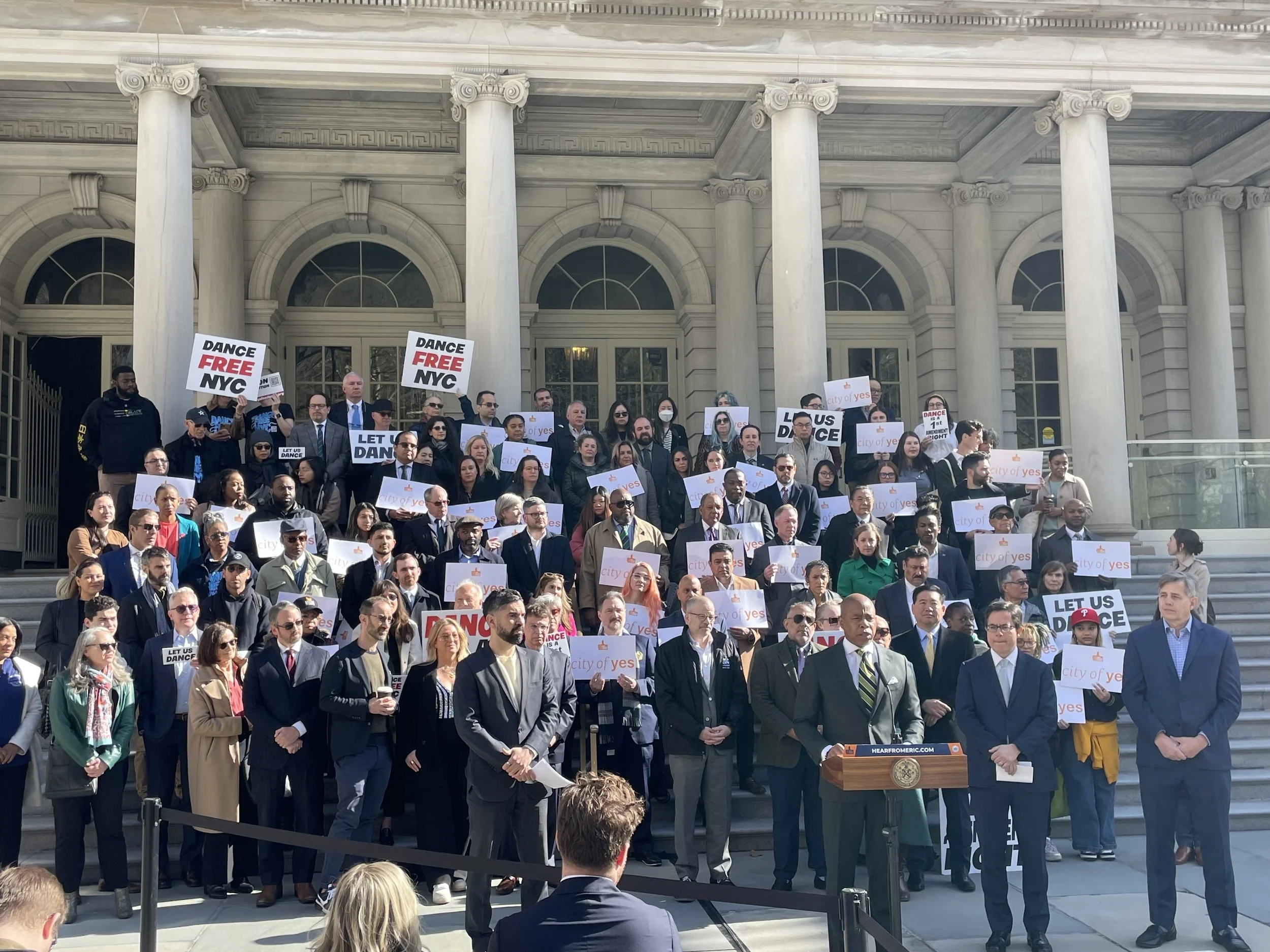
Championed the repeal of the outdated and historically racist Cabaret Law and related zoning restrictions—critical steps toward expanding dancing in restaurants and nightlife venues. We continue to advocate for simplified, equitable regulations so more businesses can allow their customers to dance, express themselves, and celebrate culture freely.
-
MEND is a citywide initiative we championed that provides free mediation to help resolve disputes between businesses and neighbors—promoting communication, compromise, and stronger, more harmonious communities for both small businesses and residents.
-
Supported the Nightlife Opioid Antagonist Program, enabling nightlife venues to receive up to five free naloxone (Narcan) kits along with training—helping staff prevent and respond to overdoses and keep people safe.
Permitting, Licensing, and Opening
-
A landmark reform at the Landmarks Preservation Commission streamlined approvals for minor alterations, expanding the types of renovations eligible for expedited staff-level review. This change helps businesses complete construction-related work faster and get open or back to business sooner.
-
We proudly championed the suspension of NYC’s unique liquor license surcharge, which caused delays and bureaucratic headaches, including affecting sidewalk café licenses for late payments.
Delivery, Reservations, Vending, Miscellaneous Reform
-
Secured laws regulating third-party delivery companies to create a fairer, more equitable marketplace for the city’s restaurants. These reforms included delivery fee caps, data transparency requirements, and prohibitions against listing restaurants for delivery without their consent, among other key consumer, business, and worker protections.
-
We secured a law that bans the unauthorized resale of restaurant reservations without a restaurant’s written permission. This reform stops third-party profiteering, restores fairness for diners, workers, and ensures restaurants—not scalpers—control access to their tables.
-
Worked to advance balanced, equitable mobile vending policies that support fair competition in the public realm—protecting brick-and-mortar restaurants while establishing clear, consistent rules for all food businesses.
-
Secured laws regulating third-party delivery companies to create a fairer, more equitable marketplace for the city’s restaurants. These reforms included delivery fee caps, data transparency requirements, and prohibitions against listing restaurants for delivery without their consent, among other key consumer, business, and worker protections.
Outdoor Dining
-
During the pandemic, we secured outdoor dining—launching the Open Restaurants program that allowed thousands of eateries to serve customers on sidewalks and streets, saving countless small businesses and more than 100,000 industry jobs. After years of advocacy, this led to historic 2023 legislation making outdoor dining permanent and more accessible citywide. Nonetheless, we continue fighting to improve this new Dining Out NYC so even more restaurants and bars can participate and thrive.
-
We secured a law allowing restaurants to serve alcohol in non-continuous outdoor spaces, including roadway dining streeteries. More recently, we won an additional 60 days for businesses to file required SLA alteration applications after DOT issues sidewalk or roadway café licenses—giving operators the flexibility they need to stay compliant while serving guests outdoors.
-
We successfully advocated for restaurants to begin operating sidewalk cafés on Sundays starting at 10 a.m., rather than noon—allowing them to capture the breakfast and early brunch crowd and increase business opportunities.
-
We helped amend the law to allow restaurants to keep doors and windows open, preserving the open-air dining experience customers love. This reform protects revenue and jobs while encouraging responsible energy use.
Rent, Utilities, and Commercial Tenant Protections
-
We reformed the Commercial Rent Tax by raising the exemption threshold, saving hundreds of restaurants and bars from an unfair and costly annual tax. This change delivers meaningful financial relief, and we will continue pushing to eliminate the tax entirely for restaurant and nightlife businesses.
-
We stopped proposed legislation that would have forced many independently owned restaurants and bars operating in hotels to close and lay off workers. By securing a critical exemption for our industry segment, we protected businesses, jobs, and the hard-earned investments.
-
Con Ed’s Gas Team offers restaurants and small food businesses preliminary information on gas availability and related costs before signing a lease. This helps owners’ budget, plan timelines, and avoid unexpected work and expenses when opening a new location.
-
Secured an anti-commercial tenant harassment legislation, letting restaurants and other tenants sue landlords who harass them to force them out or give up lease rights. Courts can impose up to $10,000 in fines plus damages and other relief for affected tenants.
Food Security and Sustainability
-
We supported this important law creating a public online directory that connects farm businesses with restaurants, bars, and other food establishments. The directory strengthens local supply chains, spurs economic development, and helps ensure New Yorkers have greater access to fresh, delicious, locally sourced food.
-
Advocated for the creations of an online food donation portal that makes it easier for restaurants and food businesses to donate surplus food. This platform streamlines connections with hunger-relief organizations, helping feed more New Yorkers while reducing food waste.
-
Supported a law creating a statewide Restaurant Meals Program under SNAP, allowing eligible homeless, elderly, and disabled New Yorkers to use benefits for hot, prepared meals at participating restaurants. This program expands access to nutritious food while supporting local restaurants and strengthening community connections.
Make an Impact Today
By contributing to the NYC Hospitality Alliance Political Action Committee (PAC), you enable us to support city and state elected leaders and candidates for public office who shape policies that affect our industry – ensuring hospitality voices are heard and supported across the five boroughs.